

Healthcare breaches are on the rise. In 2023 alone, over 109 million patients were affected by large-scale healthcare breaches, a nearly 99 percent increase over the previous year. HIPAA non-compliance is also costly: fines range from $100 to $50,000 per violation, with a maximum annual penalty of $1.5 million for each violation category. This article shows how HoundDog, HIPAA compliance software that works at the code level, automates risk analysis, PHI tracking, and vendor management, helping you avoid costly penalties while protecting sensitive data.
Making Risk Analysis Easier with Automated Data Flow Mapping (HIPAA 164.308(a)(1)(ii)(B))

HIPAA 164.308(a)(1)(ii)(B) requires organizations to regularly assess how PHI (Protected Health Information) is accessed, shared, and stored, to evaluate potential threats and act to protect it. Regular risk analysis is not just a box to check: skipping thorough assessments invites severe financial penalties and leaves you more vulnerable to breaches.
Companies often over-rely on data already collected in production and on network traffic monitoring to map their applications' data flows. At high development velocity, unpushed code changes and their impact on data flows often go undetected, leaving compliance teams reacting to changes, with little or no input on modifications that could lead to violations.
How HoundDog helps
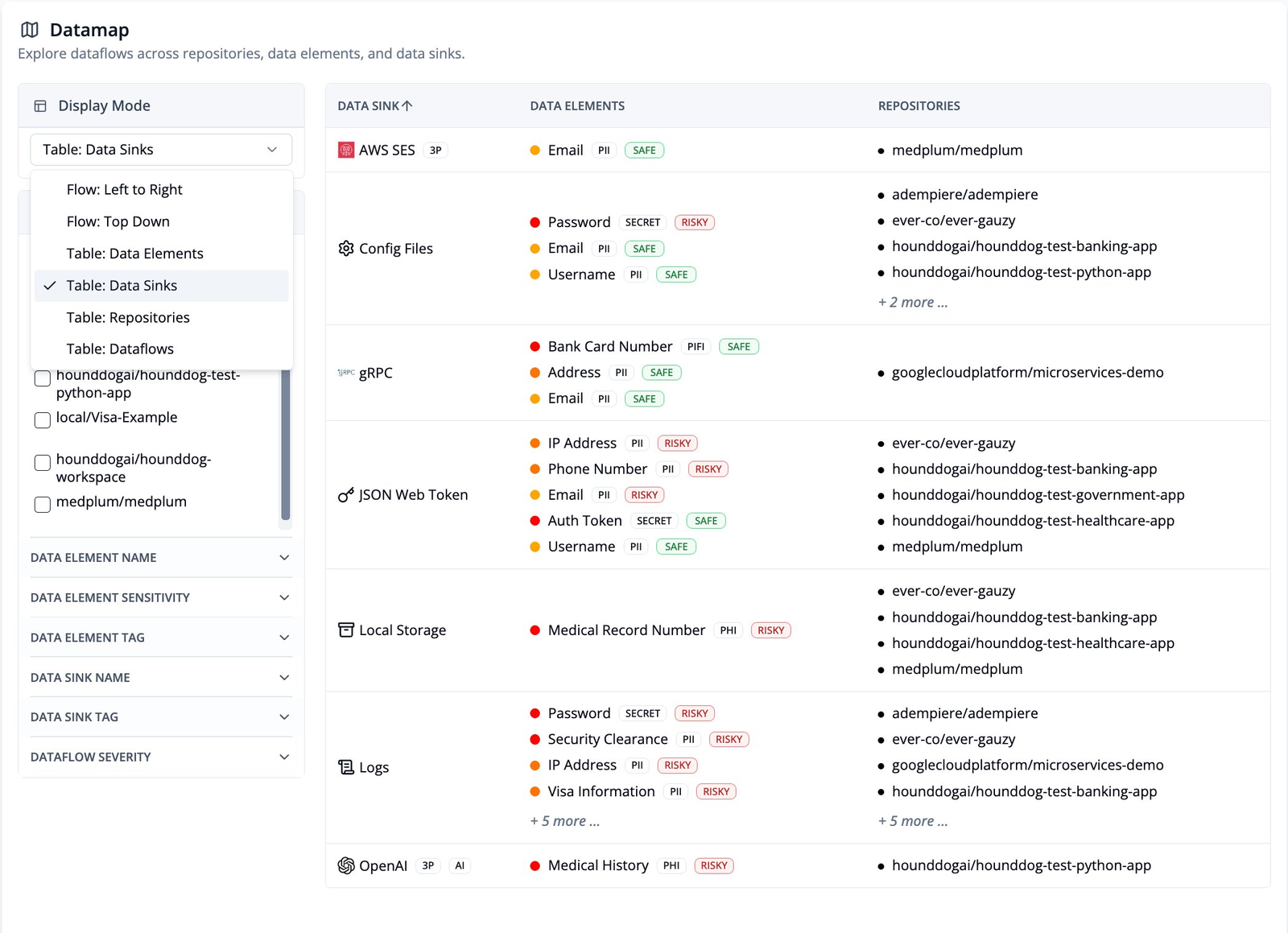
HoundDog automates the entire process of mapping data flows. It uses your application's source code as the single source of truth to continuously track how PHI flows through your application, so you always know every storage medium and third-party integration where your sensitive data will end up. All your data flows are monitored before code is pushed to production, including those through third-party processors and complex integrations.
The same mapping covers your third-party interactions, as required by HIPAA 164.314(a)(2), to help you stay on top of your Business Associate Agreements (BAAs). Instead of manual, reactive tracking, HoundDog flags compliance risks long before they reach production, so you avoid emergency fixes and costly remediation, reduce the risk of non-compliance, and avoid potential penalties.
Taking the Stress Out of PHI Tracking and Minimizing the Blast Radius (HIPAA 164.312(b))

HIPAA 164.312(b) requires a detailed log of every interaction with PHI: audit controls that track who accessed PHI, what was done with it, and when.
One key challenge in complying with HIPAA 164.312(b) is accurately mapping PHI flows across systems, storage mediums, and third-party applications while developers push frequent updates. PHI has to be handled appropriately at the speed of development, without introducing risks or violations, and tracking these flows manually is time-consuming and error-prone, which makes continuous compliance difficult.
A second challenge is minimizing the blast radius of where PHI is stored. PHI often finds its way into logs or other storage locations with no valid business justification, typically through oversharing or overlogging by developers. Each unnecessary location adds risk, and PHI exposure in logs is particularly problematic. Limiting PHI storage to where it is strictly necessary is vital both for security and for HIPAA compliance.
A third challenge is maintaining a comprehensive audit trail of who has accessed PHI across every storage medium and third-party app where it resides. HIPAA requires organizations to track access to PHI to ensure compliance and detect unauthorized activity, and the more integrations and storage locations there are, the harder a reliable, transparent audit trail becomes.
How HoundDog helps
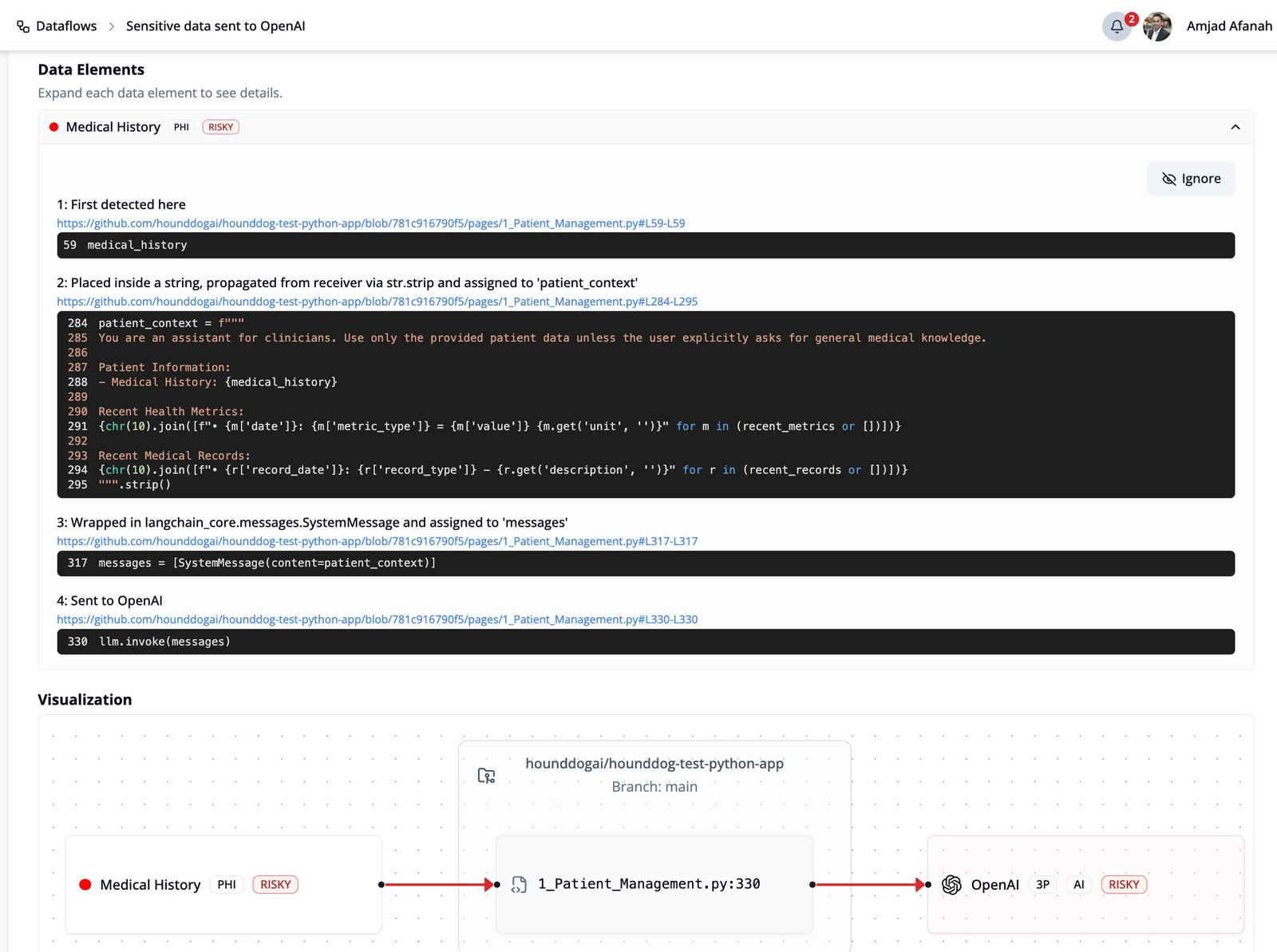
HoundDog.ai addresses the first two challenges. Its static code scanner automatically maps all data flows involving PHI between your applications, storage mediums, and third-party integrations. Detecting these flows before code is pushed to production, HoundDog flags PHI improperly stored in risky locations such as logs or files, reducing the blast radius by limiting PHI storage to secure, approved locations.
HoundDog also flags PHI flows to third-party integrations, and custom allowlists let organizations flag potential Business Associate Agreement violations based on their policies. Catching these issues early in the development cycle avoids the costly, disruptive remediation that follows violations found in production.
For compliance audits, HoundDog automatically generates Records of Processing Activities (RoPA). This meets HIPAA 164.308(a)(3)(ii)(C)'s requirement for up-to-date records of how PHI is processed. Instead of scrambling to pull together documentation, you are always ready for a review.
Simplifying Third-Party Oversight and Business Associate Compliance (HIPAA 164.314(a)(2))

HIPAA 164.314(a)(2) requires Business Associate Agreements with any third-party vendors or partners that handle PHI, setting out the responsibilities and safeguards that keep data secure.
Signing the contract is not enough. You also need to monitor the data shared with third parties so that only the agreed subset of PII or PHI is sent. Without that monitoring, your organization could be held accountable for oversharing data in violation of the signed Business Associate Agreement.
How HoundDog helps
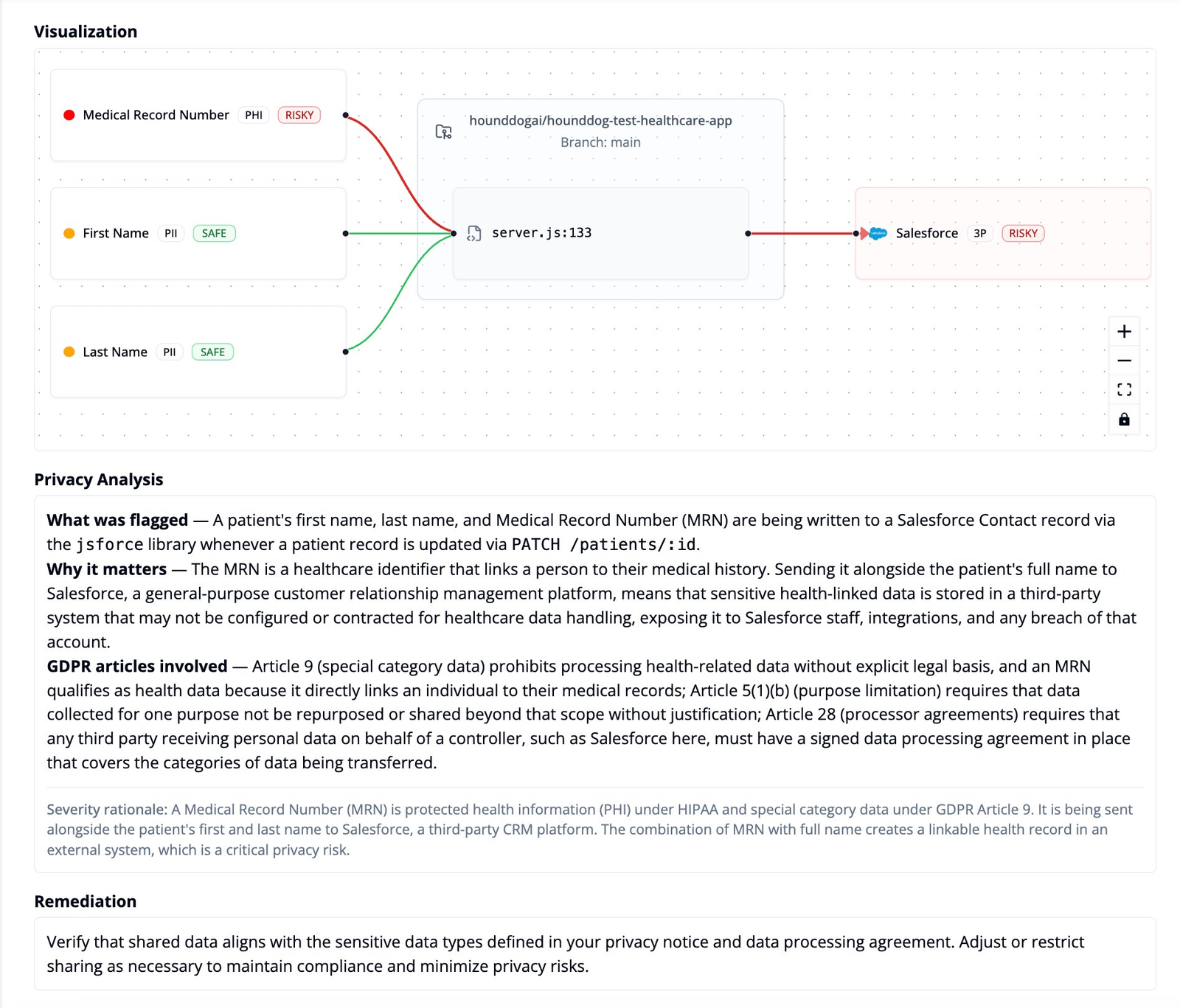
HoundDog automatically tracks every PHI interaction with business associates integrated into your application, continuously monitoring how and where data is shared and flagging risks that could lead to a violation of HIPAA 164.314(a)(2).
Because it catches third-party risks early in development, you avoid last-minute fixes and expensive remediation, and with continuous monitoring you always know what is happening with your third-party vendors, preventing violations before they happen.
Conclusion
HoundDog simplifies HIPAA compliance by automating risk analysis, proactive PHI tracking, and third-party management, so you keep visibility, catch risks early, and stay compliant. To take the stress out of HIPAA compliance, book a demo with HoundDog.